What the scope can include
We shape the engagement around the actual brief. The proposal identifies which of these deliverables are included, who supplies the inputs and how each one is accepted.
- Narrative and interaction brief
- 3D asset and visual-production plan
- Browser prototype with responsive controls
- Readable content and reduced-motion route
- Performance, device and fallback acceptance
Is this the right starting point?
Choose this service when changing viewpoint, spatial context or interaction helps a person understand the subject. If the scene only needs to play once, a filmed or rendered sequence may do the job with less complexity. The proposal states who creates the assets and how the experience works when graphics are unavailable.
From a brief to a working website
We start with the audience and the main task, define the structure, develop the visual direction and review a working version. Content, responsive behavior and the path to contact are considered throughout.
Send the existing website or references, the required languages and your target launch date. We can then discuss the scope, dependencies and a proposal specific to the project.
Choose the interaction before the rendering technique
The brief begins with the visitor's task. Should they rotate an object, compare places, move between chapters, or simply watch a sequence? A real-time scene is justified when their input changes what they learn. A rendered film or frame sequence may be easier to produce and test when the viewpoint and order are fixed. We choose the technique after a representative task and a static explanation have been agreed.
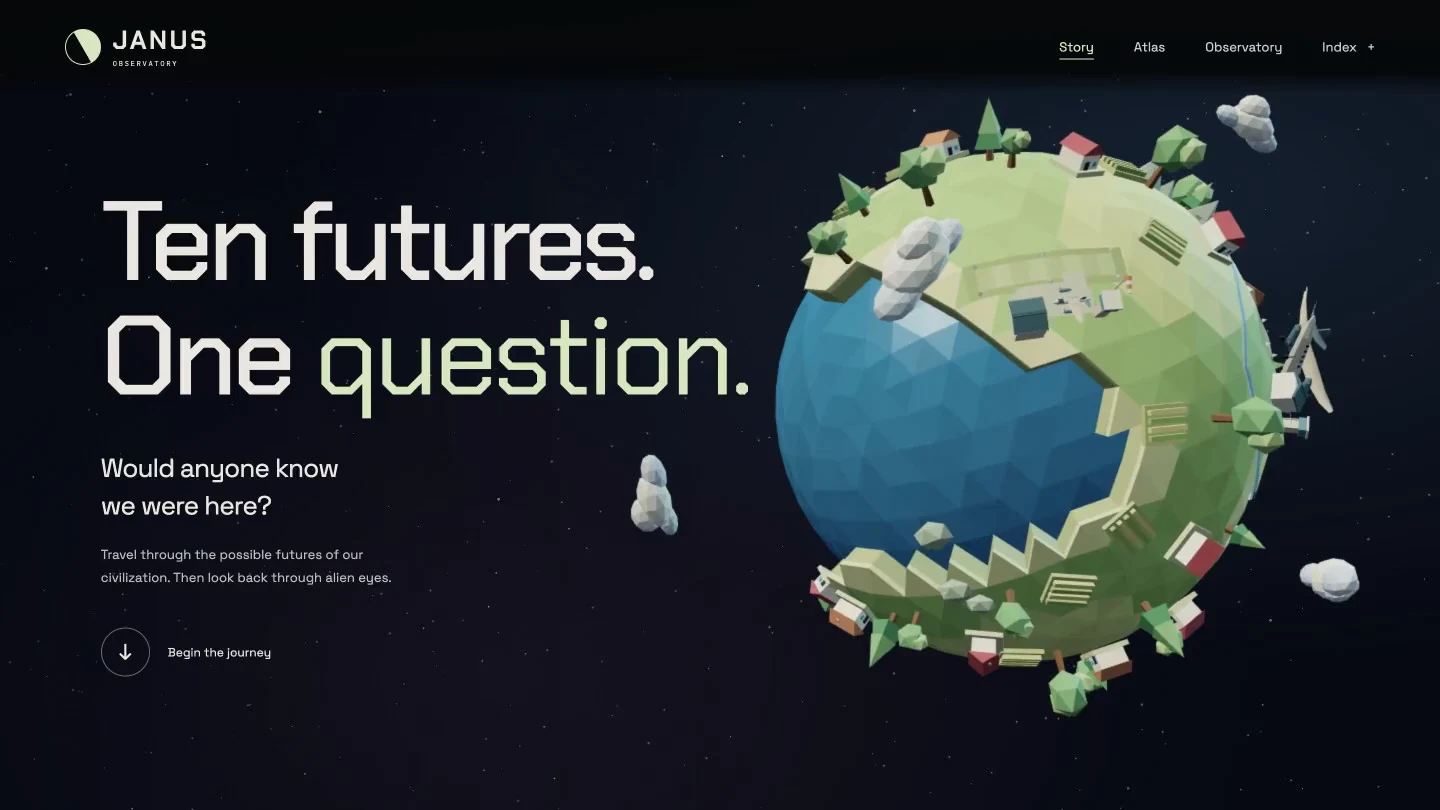
Janus Observatory is an inspectable example of this distinction. Its opening creates atmosphere, while an atlas and observatory help visitors navigate ten possible futures. The labels and written explanations carry orientation outside the visual layer. The public experience demonstrates design and implementation choices; it does not establish a measured improvement in learning or engagement.
Make the production scope comparable
A quote should separate concept and art direction, 3D modeling or licensed assets, animation, graphics programming, content writing, responsive controls, audio, testing and launch support. Name the number of distinct scenes and interaction states. A supplied product model and a custom environment are different starting points even if both appear in one browser page.
The first milestone should be a small working slice on an agreed phone and desktop browser. It needs enough real text, one representative asset and the actual interaction to reveal navigation, asset-size and frame-time problems. Review that slice before producing the rest of the scene. The final acceptance list should identify devices, loading behavior, keyboard paths, reduced motion, graphics failure and ownership of source files and third-party assets.
Keep the site useful when the scene cannot run
The headline, offer, navigation and next action belong in readable HTML. A visitor should still understand the project when motion is reduced, a graphics context is lost or a device cannot sustain the preferred scene. A fallback can be a still image, a short video or an ordinary content layout; it must preserve the decision, not merely show an error message.
Performance is evaluated on the actual assets and target devices, not promised as a universal frame-rate number. We record the load sequence, a representative interaction, memory use where relevant and any acceptable visual downgrade. The release plan also names who can replace content and models later, since a cinematic first launch is not useful if routine edits require rebuilding an opaque file.
Questions before you choose
Does an interactive 3D website always need WebGL?
No. The choice follows the task. If a person must change viewpoint or manipulate an object, real-time graphics may be appropriate. A fixed narrative can use rendered frames or video with a lighter content layer.
Can the content still be found and read without 3D?
Yes, when the essential explanation, navigation and actions are in readable HTML and the fallback is included in the scope. We test that route alongside the preferred visual experience.
How is a 3D website priced?
The proposal depends on original asset production, scene count, interaction states, content, device support and acceptance testing. Dardo provides a quote after reviewing those inputs; the planning calculator is not a 3D project price.