Product design or web design: which do you need?
A marketing website explains an offer and leads to an inquiry. A product is used again and again to get work done, so it has to handle accounts, permissions, real data and every state in between. Product design covers that second job: the flows, information architecture, components and feedback that make a tool clear on the first visit and quick on the hundredth.
If you need a site that presents your company, start with custom web design. If the product is mostly charts, maps or operational dashboards, our data visualization service goes deeper on that. Many SaaS teams need both, and we scope them as separate deliverables so each is accepted on its own terms.
What a product design engagement includes
The proposal lists which stages are in scope, who supplies the inputs and how each deliverable is accepted.
- Core task and flow mapping, including roles and permissions
- Information architecture and navigation
- Interactive prototypes reviewed with realistic content
- UI components with empty, loading, error and permission states
- Content rules and accessibility states for each component
- Implementation specifications and a review of the built interface
Designing an MVP around one real task
Start with a concrete task, such as submitting an entry, finding a record or comparing options, and define success in observable terms. We map the people, permissions, information and decisions involved. Support conversations, product data and analytics can show where a current flow breaks; when that evidence doesn't exist yet, we label assumptions as assumptions and plan focused discovery rather than presenting them as research findings.
Every flow is drawn for first use, returning use, empty data, errors, cancellation, confirmation and recovery. That state inventory makes the real effort visible early and keeps an attractive happy path from becoming the whole specification.
Prototype the decisions that are hard to reverse
The prototype concentrates on navigation, terminology, data density, responsive behavior and the feedback after each action. Reviewers work through defined tasks with realistic content, so feedback connects to what people could or couldn't complete rather than to taste alone. A prototype is evidence of the designed behavior; adoption and revenue are measured after release, and we don't promise them in advance.
Superame: designing a public project ranking
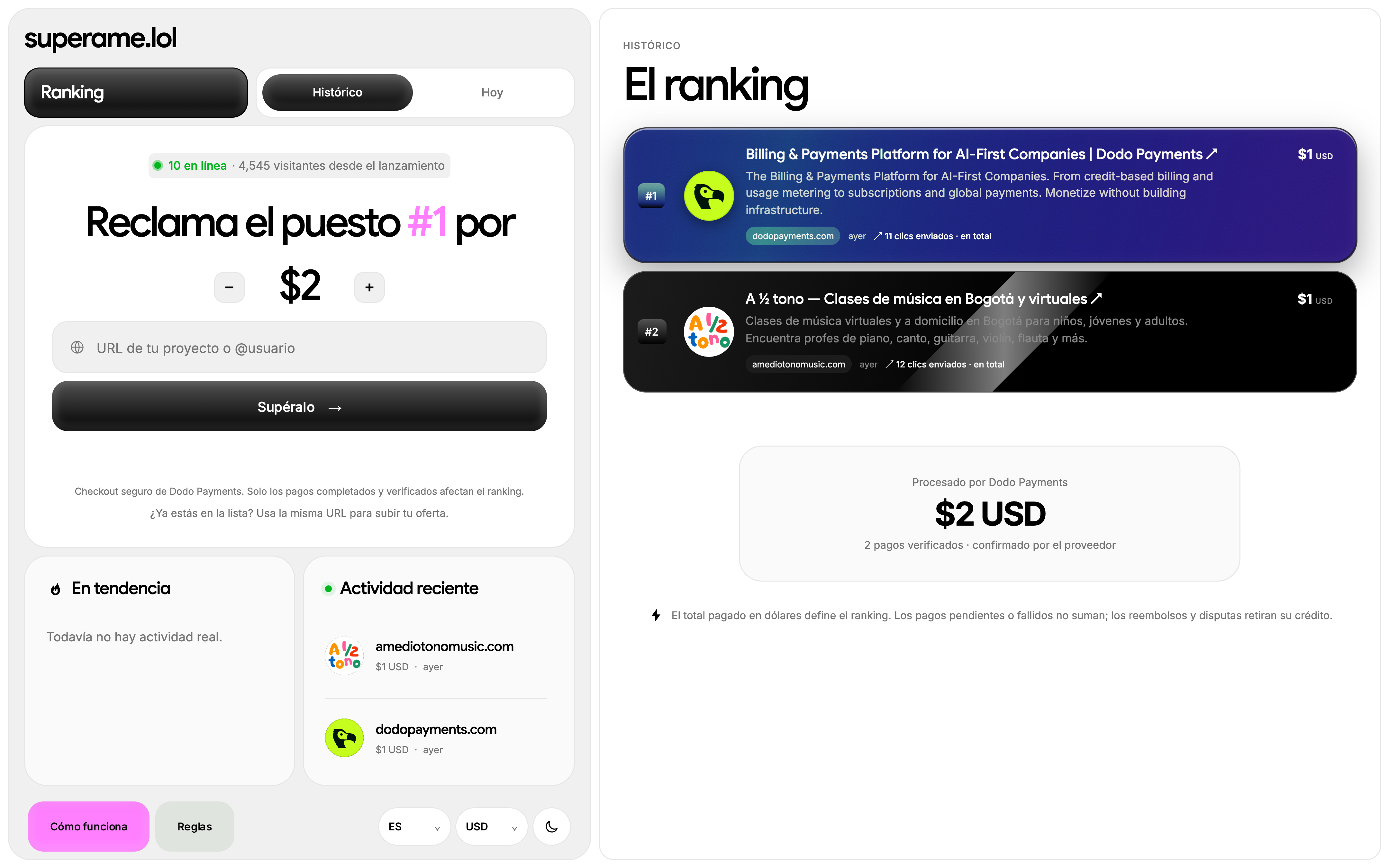
Dardo designed and developed Superame, a product that turns project discovery into a visible competition. A leaderboard creates urgency but also suspicion when positions change without explanation, so rank is the central object, supported by a stable project identity, discovery views and a plain explanation of how to take part. The design treats discovery, submission and feedback as one connected journey, and mobile interactions are designed to give equivalent feedback without relying on hover.
It is an operating product, not a mockup. The Astro application stores the ranking in a Neon database and sends buyers to Dodo Payments' hosted checkout; the server verifies signed payment callbacks before adding credit and applies the same idempotent accounting to refunds and disputes. Participation, retention and revenue figures stay unpublished until a dated product report is approved.
From prototype to working software
Handover includes components, states, content rules and implementation notes. We agree which questions need engineering or policy input, who approves them and how the built interface will be checked against the prototype. Dardo can implement the web interface or work alongside your engineers; architecture, backend, security and data responsibilities are scoped separately so nobody assumes they are covered.
Cost and working with a small senior team
Cost follows the number of user roles and core flows, the states each screen must handle, how much discovery or testing you need and whether Dardo also builds the interface. The inquiry form asks for a budget band, from under USD 5,000 to USD 60,000 and above, and we fit the scope to it rather than selling fixed screen packages.
Dardo designs products for US and Latin American teams from our base in Bogotá, Colombia. You work directly with a founder-led team of three, in English or Spanish. Bogotá is on UTC−5 all year; meeting times, review owners and decision deadlines are agreed before the project starts.
Questions before you choose
What does a product design agency do?
A product design agency plans and designs how a digital product works: task flows, information architecture, interface components, prototypes and the specifications engineers build from. Some also run research or build the product. At Dardo a scope can run from mapping one core flow to designing and implementing a web interface, and the proposal names exactly which stages are included.
How much does UX/UI design for an MVP cost?
It depends on the number of user roles, core flows and interface states, plus how much research and testing you need. We quote after mapping the core task instead of pricing by screen count, because one flow with complex permissions can outweigh ten simple pages. The budget bands in our inquiry form, from under USD 5,000 to over USD 60,000, help size the first proposal.
How long does it take to design an MVP?
It depends on how many flows and states the first release needs. We set milestones in the proposal after mapping the core task, and the first milestone is a prototype of that task with its empty and error states, which shows early whether the plan holds. If you have a launch or fundraising date, share it at the start so the scope can be phased.
Do we need users or research before starting?
No. Existing evidence such as support tickets, analytics or interviews is valuable, but many MVPs start without it. We begin with what your team knows, write assumptions down as assumptions and choose focused research or prototype tests according to the risk. What we avoid is presenting guesses as findings.
What's the difference between product design, UX design and UI design?
UX design shapes structure and flow: what people need to do and in what order. UI design shapes the interface they see and touch: layout, components, type and feedback. Product design combines both with product decisions, such as what the first release includes and how success is measured. In a small team like ours the same people cover all three, so decisions don't get lost between handoffs.
Can Dardo also build the product?
Yes, for web interfaces. We can implement the frontend or work with your engineers, and Superame is a product we designed and developed through to its payment flow. Architecture, backend, security and data responsibilities are scoped separately from interface design, so the proposal states clearly who owns each part.
Do you design dashboards and admin panels?
Yes, as part of a product's flows: navigation, tables, filters, permissions and the states around them. When the core of the work is visualizing data, such as charts, maps or rankings with sources and units, our data visualization service is the better starting point. Products that need both get one scope with shared components.
From the blog
- Remotion video: how we made a product launch commercial in code
We made Superame’s 28.8-second commercial with Remotion. What Remotion is, how it renders, who needs a license, and when After Effects fits better.
- How much does it cost to build a web app in 2026? Published prices, hourly rates and a worked estimate
A first web app costs from about USD 8,000 for one workflow to USD 50,000+ for an MVP with accounts and payments. Published prices, rates and the arithmetic.
- UX audit checklist: what to review, how to rank findings and what an audit costs
A UX audit checklist by area, from NN/g's 10 heuristics to funnels, five-user tests and WCAG 2.2, plus how to rank findings and published audit prices.