What the naming service includes
Naming can be a project on its own or part of brand creation or a rebrand. Either way, the proposal defines the number of territories, development rounds and shortlisted candidates, and who handles the legal review.
- Naming brief: audience, category, promise, personality, languages, geography and future offer
- Naming styles to pursue or avoid, required descriptors and words or associations to rule out
- Candidates developed in distinct creative territories
- Pronunciation and spelling checks in each intended language
- A reasoned shortlist, evaluated against the same criteria
- Each finalist shown in context: website header, email address, spoken introduction and a compact mark
- Dated practical checks of public web use, language and domains before legal review
Types of brand names and when each one works
The first decision is the kind of name you need. A descriptive name explains a new business quickly; an evocative name leaves room for a broader offer. The brief records that choice, so candidates are judged against a strategy rather than personal taste.
| Type | Works well when | Trade-off |
|---|---|---|
| Descriptive: says what you do | You need instant clarity in a narrow, local market | Hard to tell apart from competitors and often harder to register as a trademark |
| Suggestive or evocative: hints at a benefit or a feeling | You want character and room to grow beyond one offer | Needs a clear descriptor and website to explain it |
| Invented: a new word | You need a distinctive name across several markets | Means nothing at first, so recognition takes time to build |
| Compound: two words joined | You want meaning and distinction in one name | Can be hard to spell after hearing it |
| Founder or place name | Personal reputation or origin is part of the offer | Can limit growth or complicate a future sale |
A shortlist you can actually decide on
Candidates are developed in separate territories and compared using the same criteria: fit with the offer, pronunciation, spelling, memorability, distinction from competitors and unintended associations. That keeps the shortlist a decision tool rather than a pile of disconnected words, and it stops the loudest opinion in the room from becoming the whole decision.
Each finalist is shown where it will live: in a website header, an email address, a spoken introduction and a compact mark. A name that reads well on a slide can be hard to say on a phone call or to spell after hearing it, and context exposes that before you commit.
Names that work in English and Spanish
A name that sounds right in one language can stumble in another. Letters such as j, h, ll and v are pronounced differently in English and Spanish, accents and the ñ rarely survive in domains and email addresses, and a word can carry an unintended meaning in another country. When the brief covers both languages, finalists are reviewed by people who can judge each context, including regional variants across Latin America and Spain.
To screen a shortlist yourself first, our free brand name checker looks up the domains, lists the spellings and sound-alikes to search, and flags what English, Spanish and Portuguese speakers may stumble on.
Your brand name does not have to be a keyword
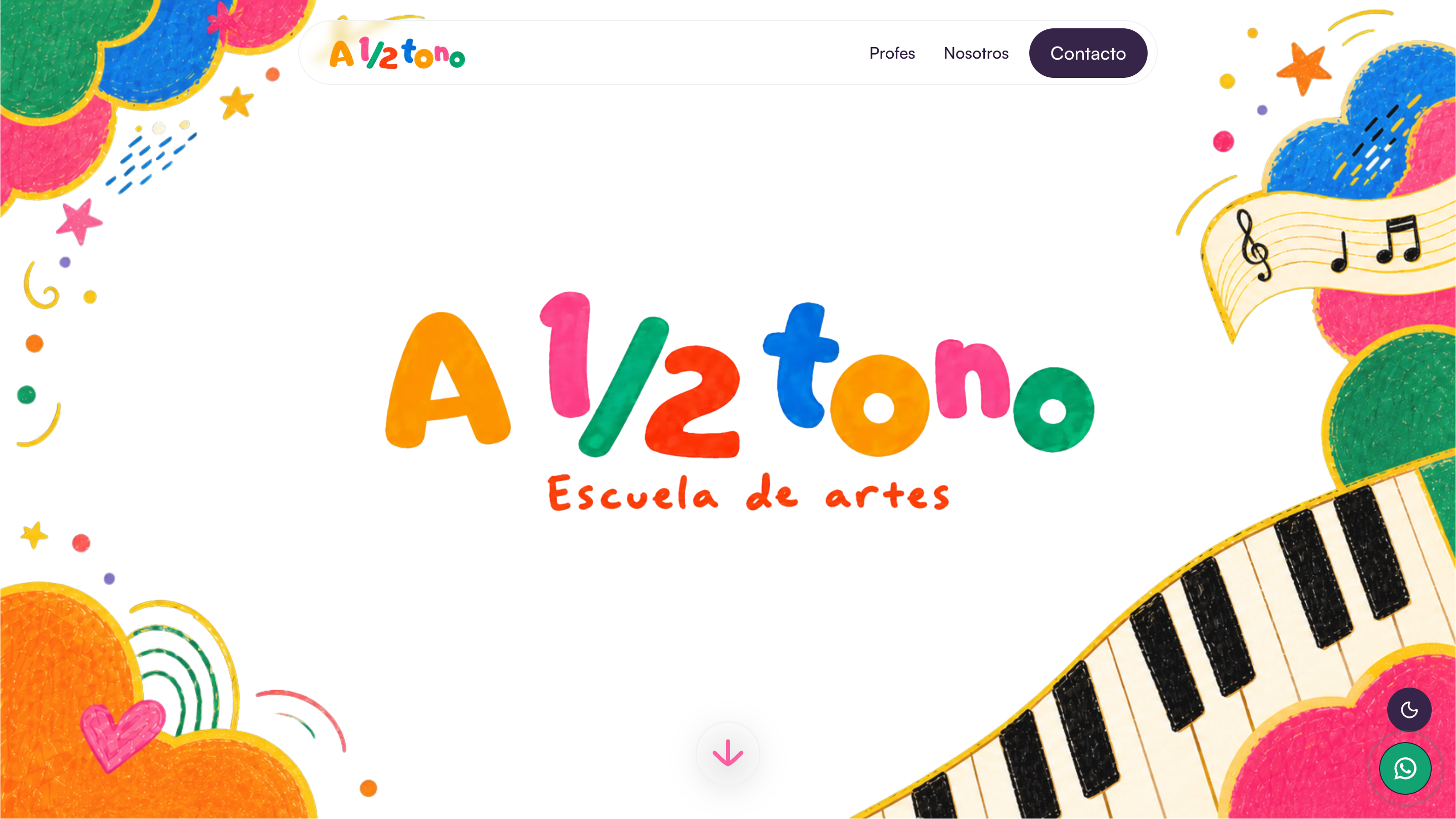
A name and a search strategy do different jobs. For the music school A medio tono, Dardo created the name and also designed, built and optimized the website. The name works as a musical reference and does not try to be a search query; the website does the literal work, with pages that explain instruments, teachers and how to start. A distinctive name is easier to remember and to find when people search for it directly, while the site carries the descriptive terms.
Trademark clearance needs a lawyer in every market
Dardo can run practical web, language and public-use checks to spot obvious conflicts early. Domain availability is checked on a stated date and can change. Trademark registrability and freedom to use are legal questions that a qualified trademark lawyer must assess in the relevant classes and in each jurisdiction where you will operate, for example with the SIC in Colombia, the USPTO in the United States or IMPI in Mexico.
Registering a company name with a chamber of commerce or a state does not, by itself, give you trademark rights. The proposal identifies who commissions the legal review and when, and no candidate is described as cleared unless the responsible lawyer confirms it.
Cost, proof and how to start
Naming is quoted on its own scope: the number of territories, rounds and languages, the depth of the checks and whether it connects to identity and website work. Published agency naming fees range from a few thousand to tens of thousands of dollars, and the lawyer's fees for trademark searches and filings are separate. In our inquiry form, people choose budget ranges from under USD 5,000 to over USD 60,000.
Dardo is a three-person, founder-led studio in Bogotá working in English and Spanish. To start, share what you are naming, the audience, the markets and languages, any names you already like or have ruled out, and your launch date.
Questions before you choose
What does a brand naming agency do?
A naming agency creates and evaluates names for companies, products and services. The work covers a strategic brief, candidate development in different territories, language and practical checks and a reasoned shortlist. A good one is also clear about its limits: trademark clearance must come from a qualified lawyer.
How much does brand naming cost?
Agency naming fees range widely, from a few thousand to tens of thousands of dollars, depending on the number of territories, rounds, languages and checks. Trademark searches and filings by a lawyer are an additional cost. Dardo quotes naming after defining that scope, either as a standalone project or as part of brand creation or a rebrand.
Is a free domain enough to know a name is available?
No. A free domain only means nobody has registered that exact address. Another business may still use or own the name as a trademark in your category, so a name can be legally risky even when the domain is free. Domain checks are useful early, but a qualified trademark lawyer must assess the name before you adopt it.
Is registering my company name the same as a trademark?
No. Registering a company or business name with a chamber of commerce or a state does not, on its own, give you trademark rights. Trademarks are registered by class with each country's office, such as the SIC in Colombia or the USPTO in the United States. A qualified lawyer should advise you on what to file and where.
Can a brand name work in both English and Spanish?
Yes, if the brief requires it from the start. The evaluation checks pronunciation, spelling and associations in both languages, including regional variants, with reviewers who can judge each context. Some names will only work in one language, and the shortlist says so instead of hiding it.
Should a brand name include keywords for SEO?
Not necessarily. Your website pages can rank for descriptive searches; the name needs to be distinctive, memorable and protectable, and descriptive names are often harder to register as trademarks. A medio tono, named by Dardo, is a musical reference rather than a search phrase, while its website explains courses and teachers.
How long does brand naming take?
It varies with the number of rounds and decision makers, and internal alignment and legal review often take longer than the creative work. The proposal sets dated checkpoints for the brief, each round and the final decision, and schedules the lawyer's review before the name is adopted.
From the blog
- How much does brand identity design cost? Published packages, guidelines prices and timelines (2026)
Published US brand identity packages ran USD 1,299–13,000 without strategy and USD 8,000–40,000+ with it. Tiers, guidelines prices and timelines.
- How much does logo design cost in 2026? Prices from logo makers, contests, freelancers and US studios
A logo costs USD 35–72 from a logo maker, USD 249–1,199 in a contest, USD 150–1,500 from a freelancer and USD 99–2,495 from US studios that publish prices.
- How much does a rebrand cost? Published prices and the rollout costs most quotes leave out
Rebrand design was published at USD 360–6,000 for small businesses and USD 8,000–40,000+ with strategy. The rollout is a second bill: here's how to price it.
- How to name a business: a step-by-step process, from naming brief to trademark search
Write a naming brief, explore territories, pick a strong type of name, then check language, domains and trademarks in every market before you test it.
Free tools
- Brand name checker
Test up to five brand names for domain registration, spelling and pronunciation. Compare candidates and open official trademark searches in five markets.