Where it started
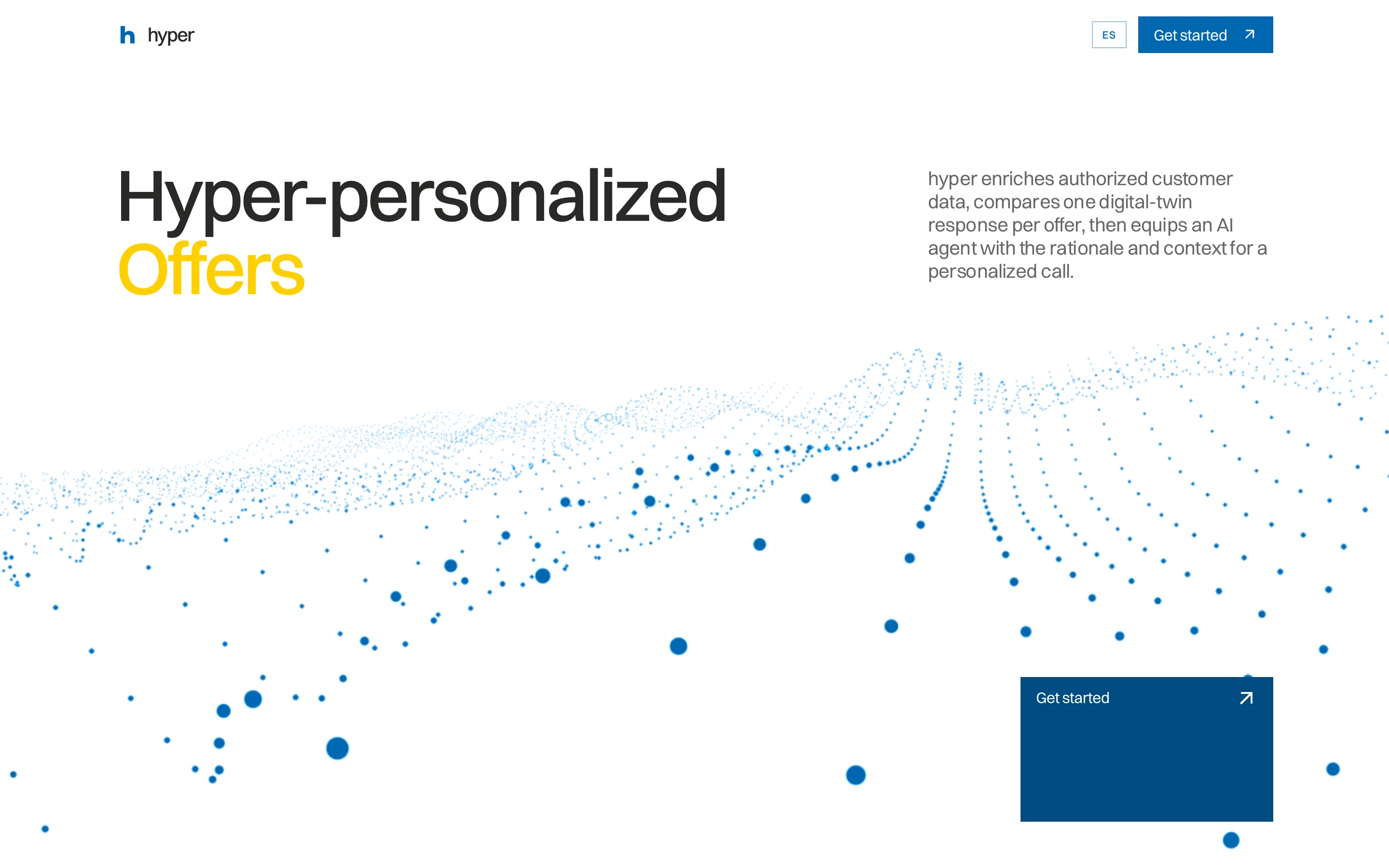
Hyper began in July 2026 as a hackathon MVP for hyper-personalized credit offers, built by a small team. Nicolás Cerón, Dardo's founder, wrote most of the code, led the web interface and owned the enrichment module; teammates owned offer decisioning and the voice call. After the hackathon the product kept going as hypers.dev, which today sells research that starts from a name: USD 10 per report, with no subscription.
The communication problem
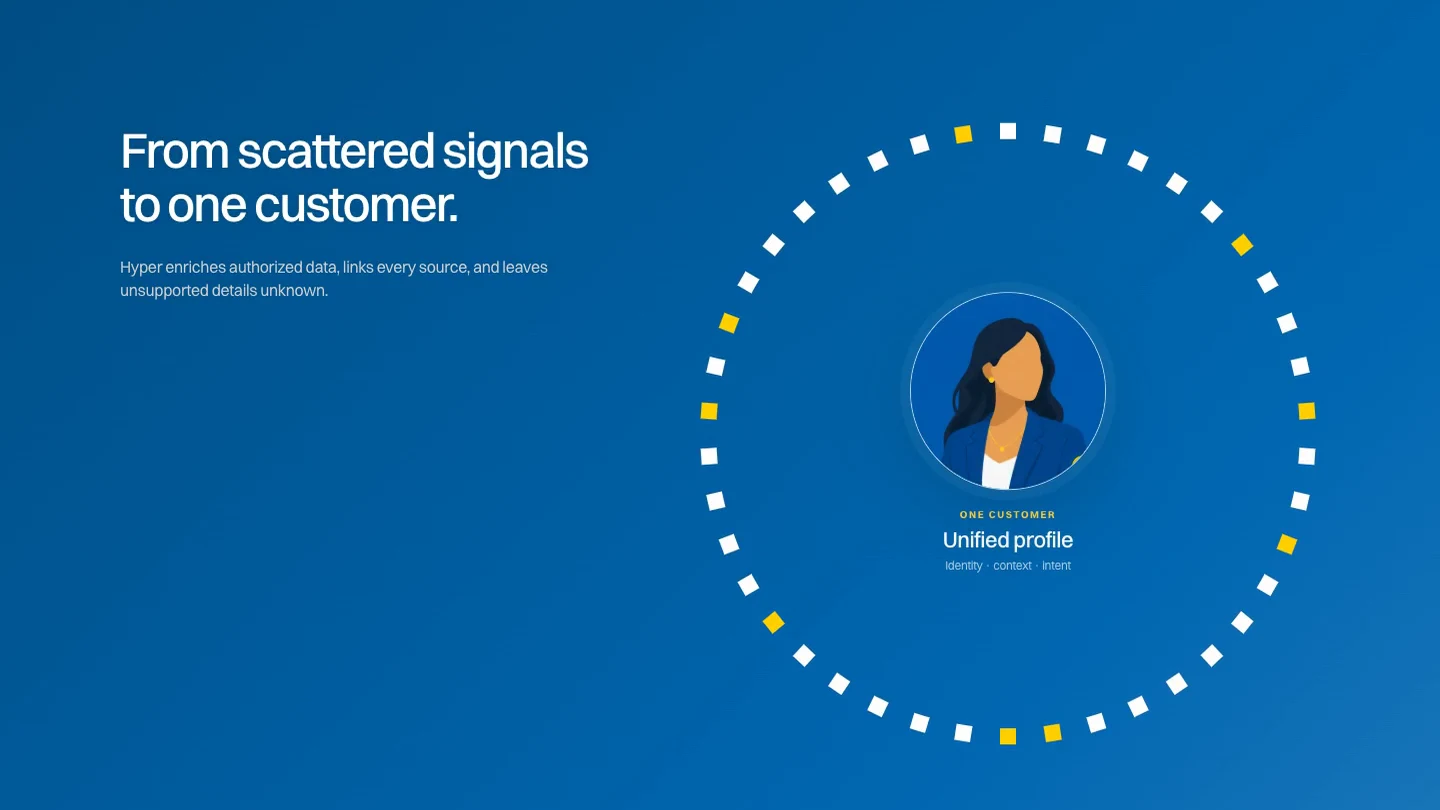
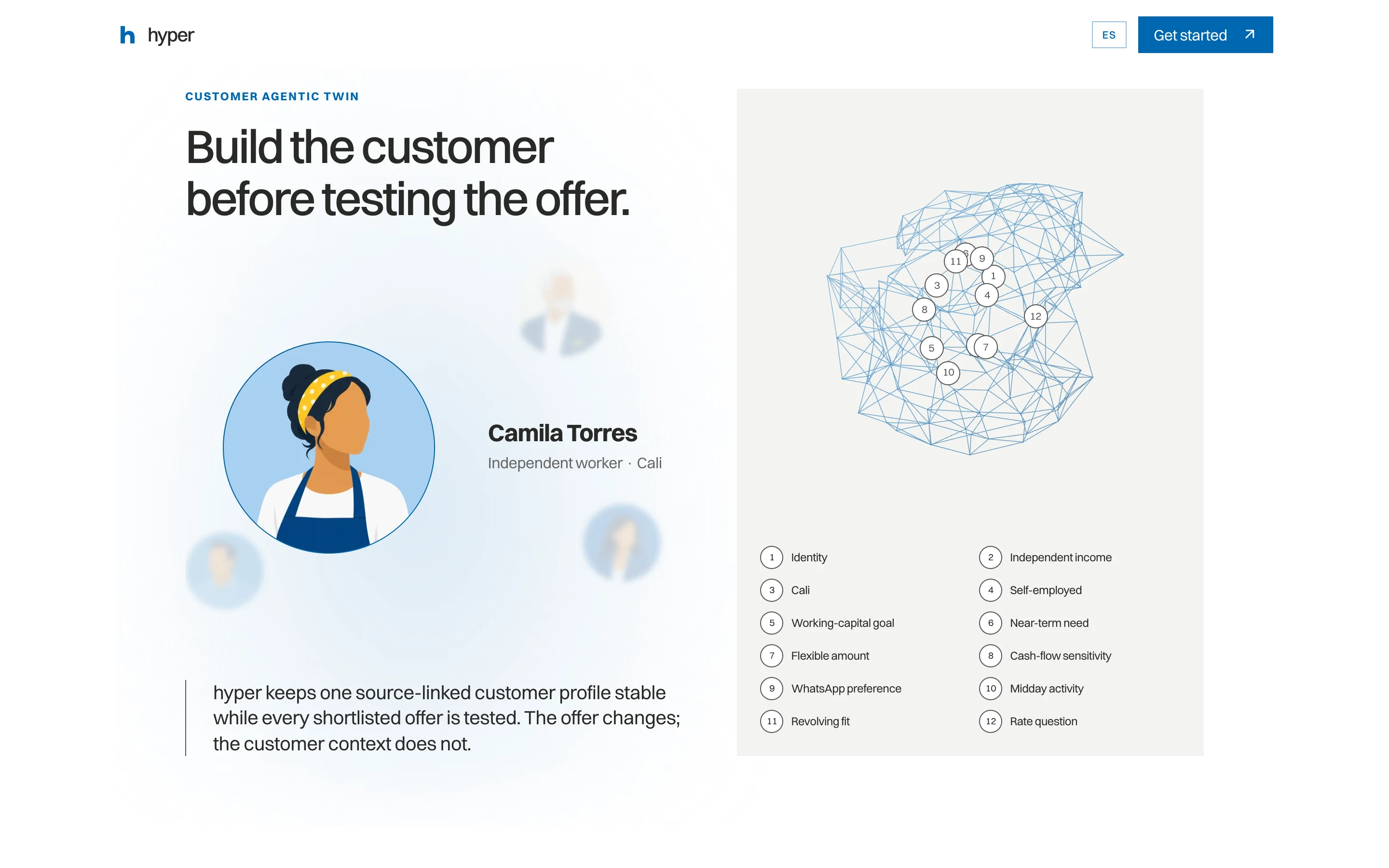
Customer-intelligence products tend to open with a wall of categories: data collection, identity resolution, prediction, segmentation, activation. Hyper's homepage starts with a person instead. As the visitor scrolls, consented data, public evidence, affiliations and recent activity reconcile into one unified profile, and that profile stays fixed while each shortlisted offer is tested against it. The order gives the motion a job: each transition explains a change in meaning rather than decorating a finished screen. That is the core of our creative development work.
What Dardo built
- The homepage story: a scroll-driven sequence built with React Three Fiber and three.js, from scattered signals to a single customer, then the "agentic twin" that tests offers against a fixed profile.
- The research pipeline's enrichment stage, which searches public evidence, links every claim to its source and leaves unsupported details unknown instead of guessing.
- Paid research: a one-time USD 10 product through Dodo Payments, verified by webhook, with refunds and disputes revoking access, and capacity limits of two concurrent research jobs and 20 jobs per day.
- Cost tracking: the cost of every AI model request is recorded in the database, so the price per report can be checked against what a report actually costs to produce.
- English and Spanish versions of the site, and Markdown copies for AI agents that ask for them.
Stack
The front end is Next.js 16 on Cloudflare Workers through OpenNext, with React Three Fiber, three.js and Lenis for the interactive story. The research backend is a Python FastAPI service running in a Cloudflare Container behind a service binding, with data in Cloudflare D1 and Redis.
Implementation evidence
On 12 October 2026 we checked the live site at hypers.dev, its English and Spanish versions and its USD 10 research offer, and reviewed the implementation behind them: the Next.js front end and its Cloudflare deployment, the FastAPI service, the payment webhook and access rules, and the cost journal. All customer examples on the public page, including the homebuyer profile, are synthetic.
Evidence and limits
This page describes the delivered product and the parts Dardo built. It does not claim revenue, users or reports sold, which haven't been published, and it does not present the hackathon as a won competition or the synthetic examples as real customer data.
Sources & further reading
Primary project evidence: the live deployment and implementation details reviewed by Dardo for this case.
- Hyper live websitehypers.dev