Hourly, project or retainer?
A design-only quote and a complete bilingual build buy different work. The provider examples below explain price models; each keeps its original currency, scope and source. Ask finalists to price the same inventory.
| Model | Best question to ask |
|---|---|
| Hourly | What is the estimate, cap and approval rule? |
| Fixed project | What exact inventory and acceptance tests are included? |
| Retainer | What capacity, response and ownership does it buy? |
Compare total ownership over the same period. A small monthly maintenance allowance does not include a new visual system unless the proposal says so. Dardo prepares project scope and pricing from the actual brief.
- 01Scope
- 02Model
- 03Total cost
- 04Proposal
Price the work, not the page count
A web designer may be selling interface design only, a design system that a developer will build, a complete design-and-development project, or ongoing improvements. Those are different purchases. A landing page with supplied copy and a custom multilingual site with research, content, integrations and migration cannot share a meaningful price merely because each is called a website.
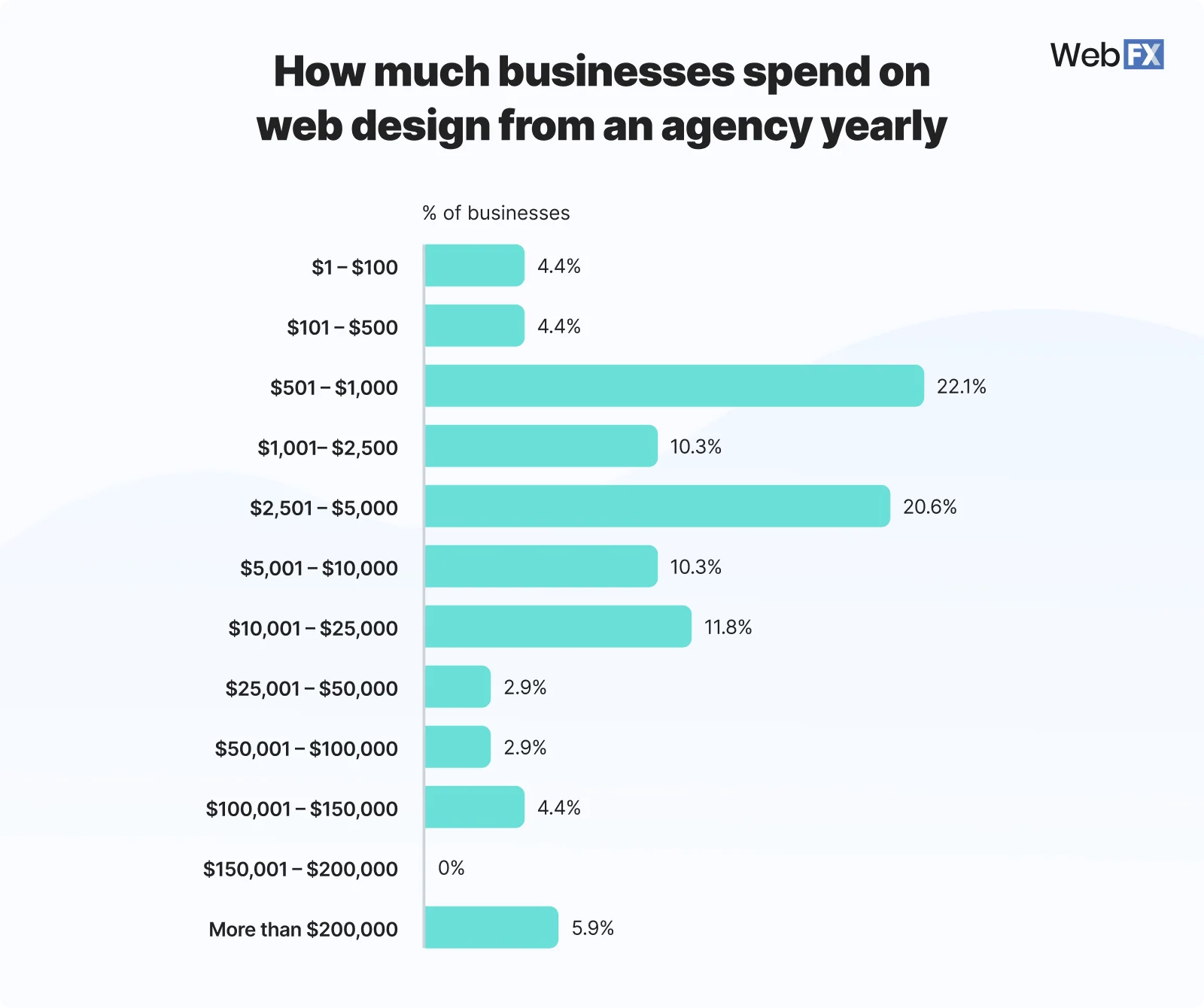
Two dated provider examples show the spread without pretending to be a market average. On the Upwork web-designer cost page reviewed on 15 September 2026, the platform reports a typical $15–$30 USD hourly range and lists $15–$40+ per hour for a basic one-page design, $20–$50+ per hour for CMS design and $45–$75+ per hour for full custom design. WebFX’s 2026 pricing guide reports $1,000–$30,000+ average design spending from a survey of 250 US marketing professionals. These are attributable observations with different methods and currencies, not a Dardo price or a universal quote.
Hourly billing: buy time with guardrails
Hourly billing fits work whose scope is genuinely uncertain: an audit, a small redesign, design-system cleanup, content migration or a short discovery sprint. Ask for the role doing the work, the rate, the estimated hours, the review cadence and a ceiling that requires approval before it is exceeded. The basic model is hours × rate + approved expenses; write the currency and whether tax or platform fees are included.
A published maintenance price illustrates why the allowance matters. WCFM Design lists a one-hour website maintenance package at $65 USD per month, three hours at $180, five at $275 and ten at $500, with lower additional hourly rates at larger tiers. NewWorks Design lists three maintenance hours at $90 per month and says overage is billed at its $65 hourly agency rate. These pages describe maintenance, not a full brand or website build. Use them to ask what an hour buys, how unused time expires and whether a new feature is outside the allowance.


Fixed fees: buy a defined outcome
A fixed fee works when the inventory is clear: page types, content entries, integrations, languages, design rounds, development tasks, testing and launch support. It gives the buyer a total to approve, but it does not remove scope risk. A quote that says “five pages” can still hide copywriting, responsive states, CMS setup, accessibility, redirects, analytics, image licensing or post-launch fixes.
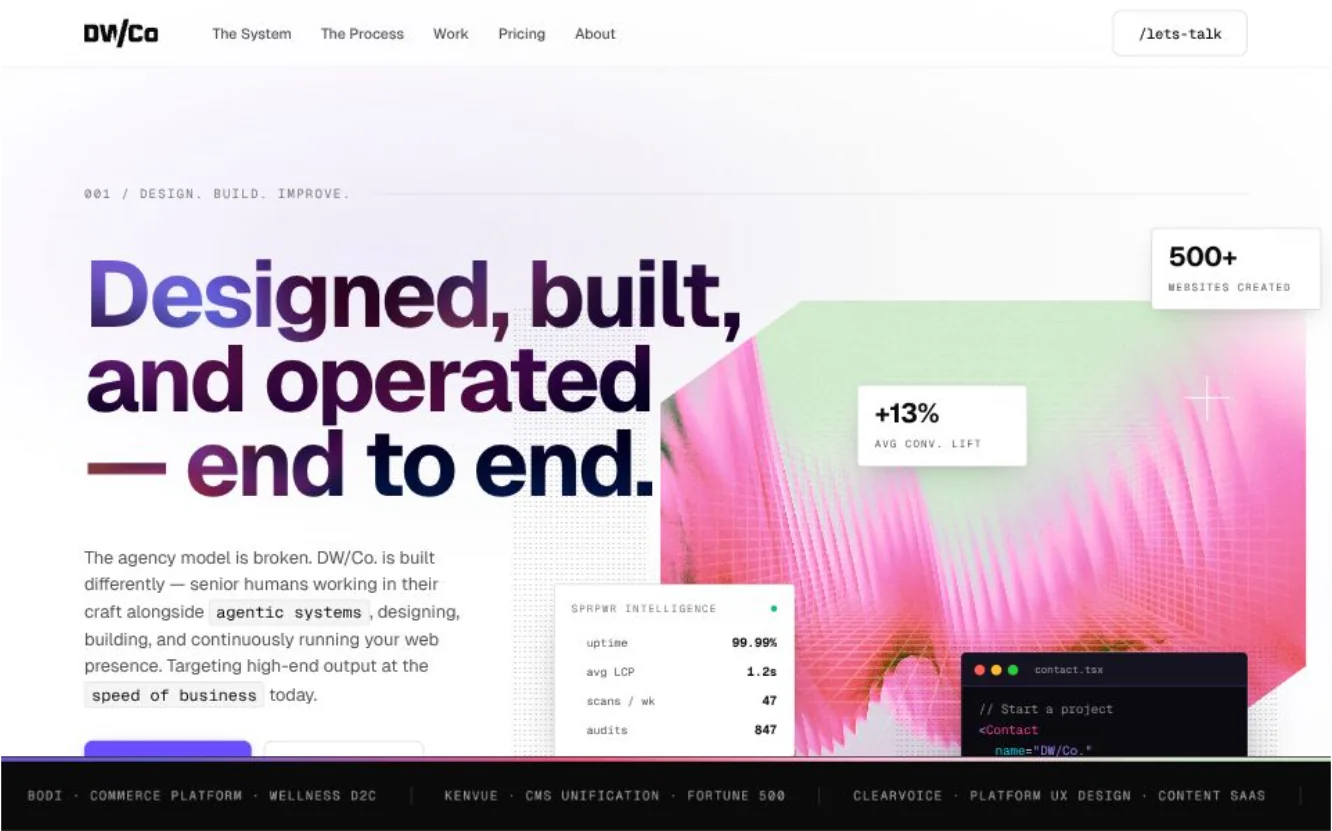
DW/Co’s published pricing page, reviewed on 15 September 2026, gives an attributable example of productized fixed work: its Basic path starts at $3,000 USD and its Crafted path starts at $6,000, with an additional styled page at $500 and a duplicate page at $120. The same page says the estimate is preliminary, defines ownership and separates care after launch. WebFX’s survey ranges are broader and not comparable line by line. Treat every provider’s number as that provider’s offer until a signed scope makes the comparison fair.
Retainers buy continuity, not a vague promise
A retainer is useful after launch when a team needs a known response path, reserved design or development capacity, monitoring, content changes or a roadmap. Clarify whether it is maintenance, a ticket queue, a block of hours, embedded senior work or a subscription that includes hosting and ownership conditions. Ask what is excluded: new templates, strategy, copy, SEO, emergencies and third-party bills often sit outside the monthly line.
The published examples cover very different products. ALF Design Group lists Maintain at S$2,500 per month for UX consultation and Webflow design and development, and Grow at S$4,500 with SEO management, Search Console monitoring and performance reporting. DW/Co lists a senior-team Signature retainer from $6,000 USD per month with a four-month minimum for complex platforms and funnels. Those are provider-specific premium offers. A small maintenance allowance such as WCFM’s $65 per month is not an alternative version of the same service; it buys a different amount of responsibility.
Scope explains most price differences
Before comparing totals, normalize what the designer must do. Record the audience and business task, the number of unique templates, repeated entries, languages, content responsibility, brand work, UX research, copy, photography, animation, CMS, integrations, migration and QA. Include small screens, keyboard use, reduced motion, performance checks and the form or booking path. A premium visual direction is only one part of the work if someone must also turn it into reliable code.
Ownership changes the economics too. The provider may transfer the domain, content, design files and source code immediately, after final payment or after a subscription term. Hosting, security, backups, analytics and support may be included for a period or sold separately. Ask who can export the site and who fixes a defect after launch. A lower headline can represent less work, fewer rights or a different operating burden; a higher one can include strategy and accountability that the cheaper quote leaves with you.
Turn every quote into the same worksheet
Send every candidate the same brief and request the same lines: discovery, information architecture, copy, visual direction, unique templates, content entry, development, integrations, localization, accessibility, technical SEO, migration, testing, launch and support. For each line ask for included, excluded, assumed or optional, plus quantity, review rounds, owner and acceptance evidence. This makes a fixed quote comparable with an hourly estimate without pretending the models are identical.
Keep three records separate: the provider’s public example and retrieval date, the assumptions used for your request, and the final signed scope. Preserve the currency and tax treatment; do not convert USD, COP, SGD or GBP into a timeless ranking. Write the inquiry receipt you expect: a working form record, booking confirmation, email response or handoff document. If the quote does not say how that result is checked, the total is not yet a complete offer.
Choose the model from your uncertainty
Use hourly discovery when the problem is still being learned, fixed pricing when the inventory and acceptance test are stable, and a retainer when the business will keep changing the site after launch. A hybrid can be sensible: a short paid discovery creates the inventory and then becomes a fixed build, followed by an optional care plan. The model should reduce a known risk; it should not hide an undefined scope behind a monthly number.
Dardo’s public services and project pages state what the studio offers, not a standing price list. Ask Dardo for a written quote after sharing audience, routes, languages, content ownership, platform, integrations, deliverables and support needs. Keep the quote’s currency, assumptions and expiry date in your comparison; do not substitute a guessed rate for information the provider has not published. The provider examples above help you frame the request, but they do not predict what Dardo or any other studio will charge.
Ask for a decision-ready proposal
A strong proposal answers five questions: what will exist at launch, who does each part, what does the buyer supply, what does the price exclude, and how will the live result be accepted? Add the payment schedule, change-request rule, ownership transfer, defect period, recurring charges, account access and exit path.
The answer is a range of models, not a magic number. Published rates are useful anchors only when their date, geography, currency, scope and seller are visible. Cost becomes trustworthy when the number connects to a defined decision, maintainable deliverable and proof the site works.
Sources & further reading
Sources behind this guide, with further detail from the original publishers.
- Upwork: web designer hourly rates and cost factors
- WebFX: web design pricing guide and 2026 survey
- DW/Co.: published website paths, fixed fees and retainers
- WCFM Design: website maintenance retainer packages
- NewWorks Design: website retainer basic plan
- ALF Design Group: web design and UX pricing
- Dardo: A medio tono project scope