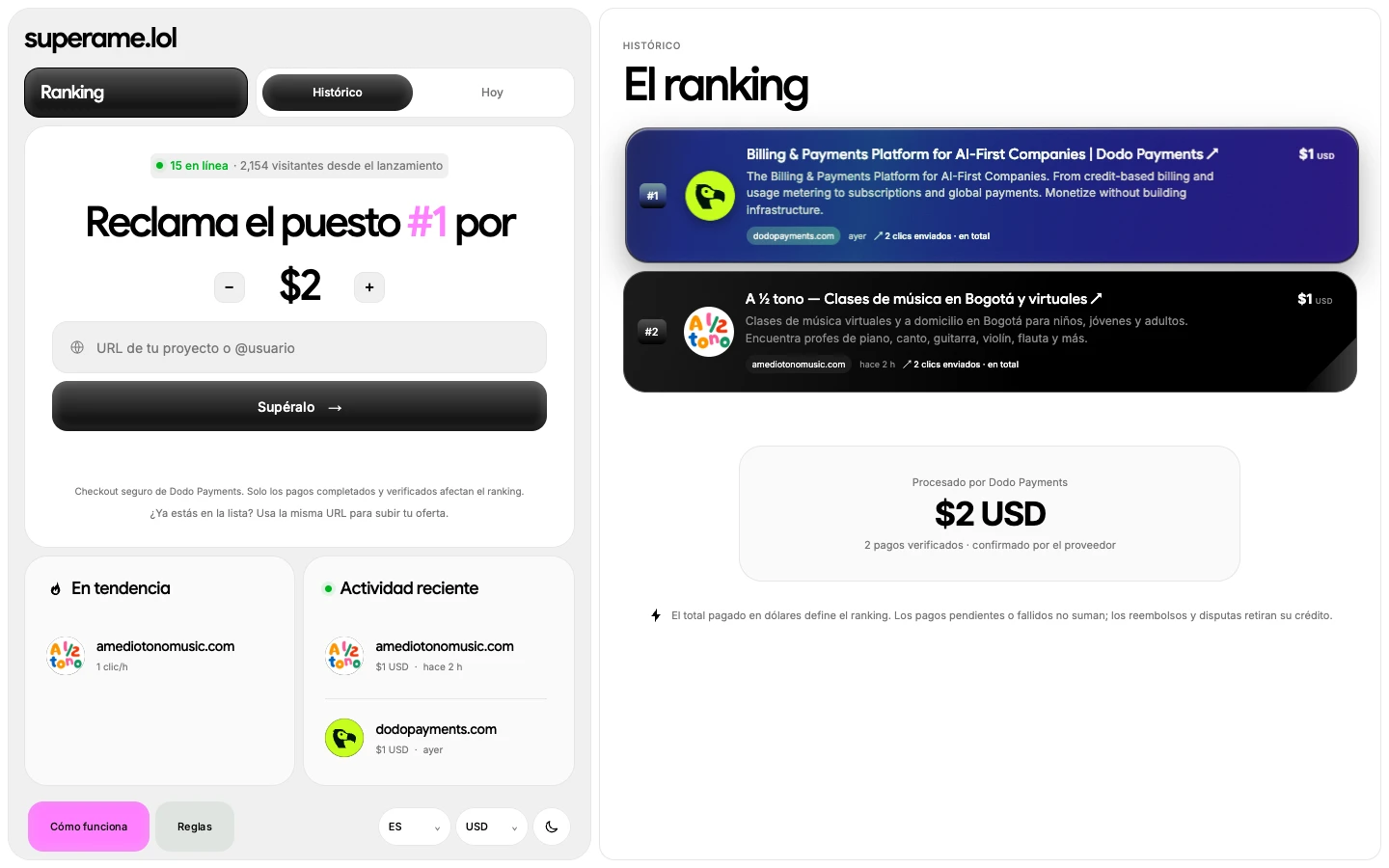
A single visible rule with several hidden states
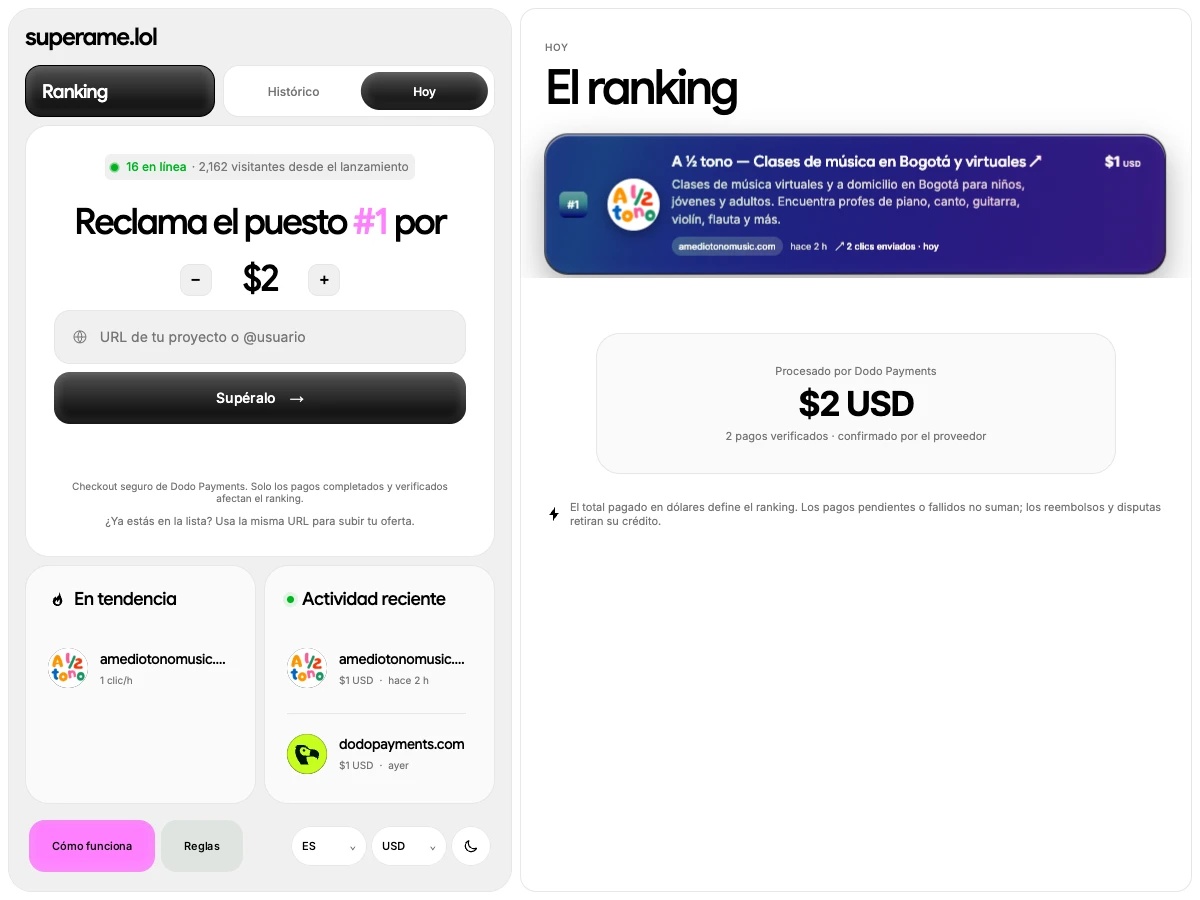
Supérame puts an all-time ranking beside a clear invitation to claim a position. A creator enters a project URL or handle, chooses a bid and moves toward hosted checkout; a visitor can inspect projects and follow outbound links. That apparent simplicity depends on state design. A pending checkout must not look like a confirmed rank. A duplicate submission needs a predictable result. A refund or dispute must reconcile the ranking with payment records. The page's interaction and copy therefore carry a trust job, not only a conversion job. Public screenshots show the interface; implementation review supports the verified callback and accounting behavior described in the case study.
Design the full transaction journey
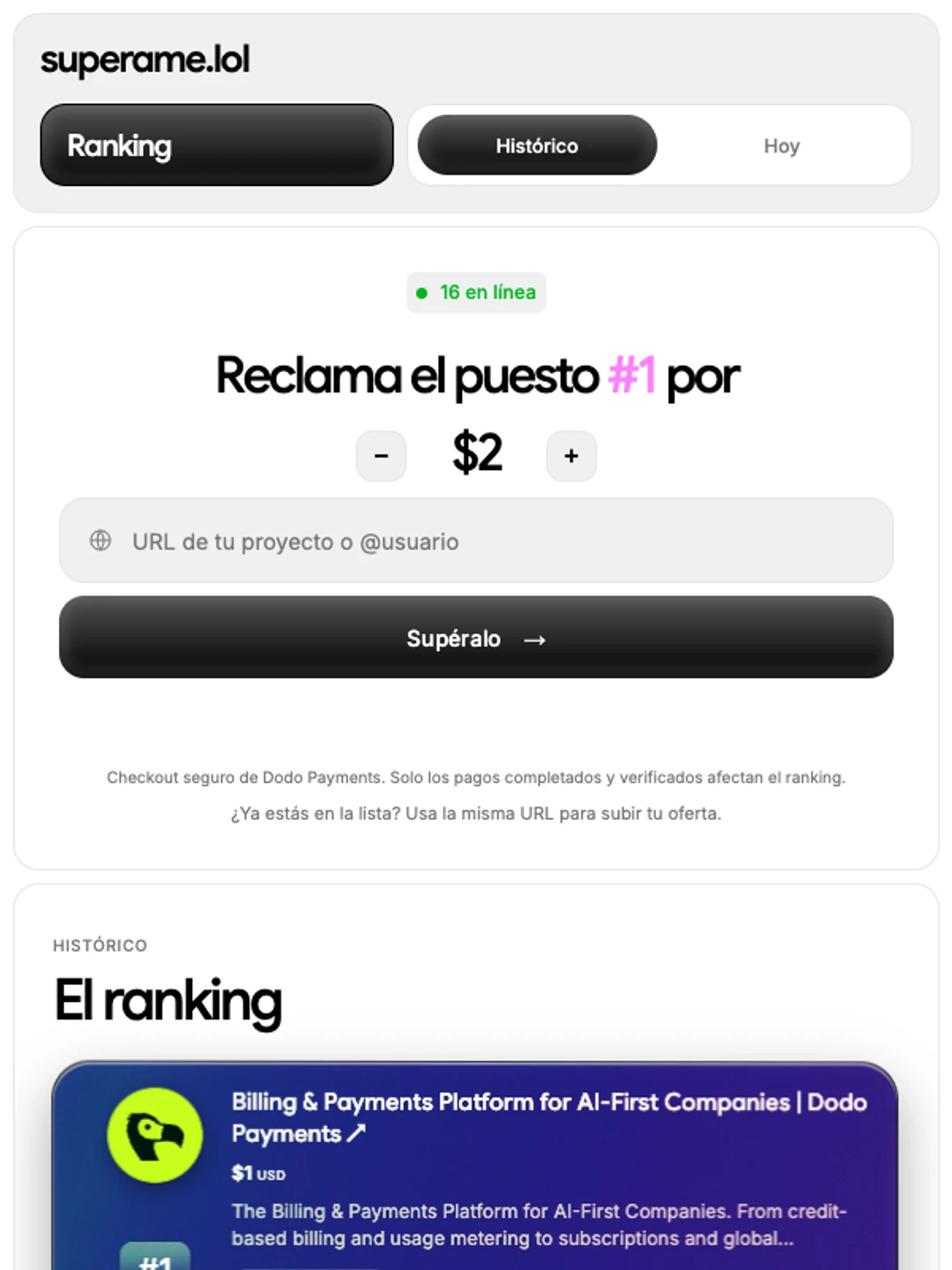
The useful unit of product design is not the bid form alone. It runs from understanding the rule, entering a valid project, seeing the amount and payment provider, returning from checkout, confirming the final ranking state and finding help when something differs from expectation. Each point needs its own copy and feedback. On mobile, position and action need equivalent clarity without hover. The ranking should expose when it was last updated and make the selected project identifiable if placement changes. This is an acceptance model for evaluating the published flow; it is not a claim that a usability study or conversion experiment has already been run.
Trust states to review
A working commercial product must agree with the state the buyer sees. Review these transitions against server records and a labeled test transaction.
| State | Interface responsibility | System check |
|---|---|---|
| Payment pending | Explain that placement is not confirmed | No ranking credit before a verified provider event |
| Payment confirmed | Show project identity and current placement | One verified event creates one credit |
| Refund or dispute | Explain resulting placement change and support path | Reversal is idempotent and matches provider status |
Delivery evidence and the next question
The live product and implementation review support an Astro application with Neon-backed ranking, hosted Dodo Payments checkout, signed callback verification, idempotent credit and reversal logic, and outbound visit attribution. They do not establish how many buyers completed the flow, how often participants returned or whether ranking exposure produced business value. The next useful evidence would be a dated funnel report separating valid submissions, completed payments, reversals and project visits, with definitions and privacy review. That report would test the commercial hypothesis instead of treating the working product as proof of demand.
Sources & editorial notes
Sources
- Supérame — public productsuperame.lol
How we built this guide
EvidenceThis guide combines 1 linked source, Dardo’s analysis and clearly labeled project examples.
LimitsVisible design and content decisions are not presented as measured ranking, traffic or conversion gains.
Read our editorial policy