What references from the the United States reveal
The United States examples span a shared brand-product system, a wider marketing ecosystem and a complex digital platform. Clay publishes work including Slack’s interactive demo and STC Bank, with brand, product, website, development and content services. Instrument presents combined brand, product and marketing work with references such as Nike, Oura and ServiceNow. Work & Co publishes strategy, design and development for platforms, with a reviewed website image of interconnected yellow forms on black. Clay and Instrument are represented by official social cards. None of these assets independently proves scope, performance or authorship of every visible detail. Use Clay to investigate how a public sales story and product interface share components without blocking separate releases. Use Instrument to separate the permanent platform from campaigns and recurring content production. Use Work & Co to examine the integrations, product states and operating team behind a substantial platform. A US showcase can easily become a list of famous names; resist that shortcut. Request the precise case role, actual team, live behavior and maintenance arrangement. Convert admired traits into acceptance language covering hierarchy, responsive states, accessibility, content tools, integration failure and analytics ownership. That makes the reference portable without asking anyone to imitate its surface.
These references are presented for design analysis and inspiration. This is not an audited ranking, a quality certification or a claim that Dardo created or measured the featured work.
Three website references to study
01 / Clay
Clay studio presentation
What stands out
The reviewed record is an official social presentation image: Presentation image published by Clay. For Clay, it should be read as the studio's own presentation, not as an independent audit or a complete capture of every interface state. Clay’s public work includes Slack’s interactive demo and STC Bank, with services covering branding, product design, websites, development and content. Its San Francisco-based offer is useful when a complex product needs a clear public explanation. Ask how the sales website and product interface share a design system without forcing the same delivery cadence. In this showcase, its useful role is to focus discussion on shared systems, campaign boundaries and platform operations. The image can establish a visual direction and the official source, while a buyer still needs to open a relevant live case, verify Clay's precise contribution, and test the content, mobile behavior, accessibility and operational states that the static record cannot reveal.
Translate this reference into a testable requirement about shared systems, campaign boundaries and platform operations. Ask Clay: “Which product interactions will the website demonstrate, and who keeps those demonstrations accurate?” Then request the closest live example and its exact role. Put Clay's answer into the proposal as named pages or states, content owners, responsive and accessibility checks, acceptance evidence and post-launch responsibility. Do not copy Clay's surface or assume the presentation proves a result; use the source to sharpen what your own users must understand or complete.
02 / Instrument
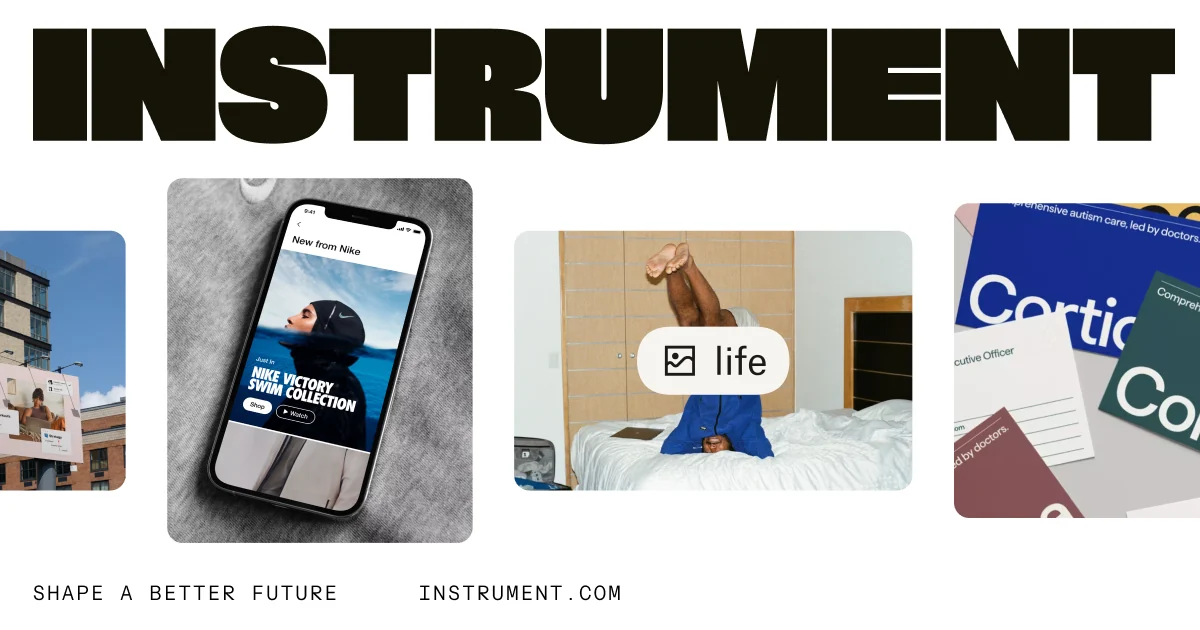
Instrument studio presentation
What stands out
Presentation image published by Instrument is the subject of this reviewed record. Because it is an official social presentation image, it documents how Instrument presents its work rather than proving performance, accessibility or authorship of every visible element. Instrument publishes a combined brand, product and marketing offer, including websites and campaigns, with client references such as Nike, Oura and ServiceNow. Review it when several touchpoints need a coherent creative direction. Ask for the precise role behind a comparable case and separate the permanent website platform from campaign assets and recurring production. For this market comparison, inspect the asset through shared systems, campaign boundaries and platform operations. Follow Instrument's official link to a comparable live journey, ask which team and collaborators delivered it, and check ordinary pages, errors, confirmation and editing. For Instrument, those steps preserve the visual lesson without asking a promotional still to carry evidence it does not contain.
Use Instrument's image to brief a decision, not to prescribe a copy. The relevant fit is brand, product and marketing experiences. Ask: “Who owns the core website platform, and how will new campaigns reuse it without repeated rebuilds?” A useful response from Instrument should name the people, workflow and live evidence behind it. Record the requirement alongside shared systems, campaign boundaries and platform operations, then test it with realistic material on mobile and desktop. Confirm who at Instrument implements, verifies and maintains the behavior so the visual ambition survives ordinary use.
03 / Work & Co
Work & Co interconnected-shapes visual

What stands out
This example uses an official website or project presentation image described in the evidence library as: Interconnected yellow shapes on black, published by Work & Co. The format of Work & Co's record is disclosed because a presentation image and a live-project audit answer different questions. Work & Co presents strategy, design and development for digital platforms, with recent public work including JW Anderson, Pfizer and Celanese. It lists US and Brazilian offices among its locations. Review it when a website involves substantial product or commerce functionality, then ask which team, integrations and ongoing release responsibilities the proposal includes. Its place in this collection is therefore analytical: it helps a buyer examine shared systems, campaign boundaries and platform operations. Treat Work & Co's composition as a starting point, then verify the current site, the agency's exact role, responsive and keyboard behavior, realistic content, failure states and the people responsible for updates after launch.
The buyer lesson is to connect digital platforms and complex customer products with a concrete acceptance task. Put this question to the studio: “Which customer journey and integrations will the first release deliver, and who operates subsequent releases?” Compare the answer with your needs around shared systems, campaign boundaries and platform operations; ask for a comparable live walkthrough and disclose any collaborators. The contract with Work & Co should identify content, components, data or integrations, test conditions, ownership and support. That is stronger evidence than choosing by the still image alone.
Questions before you choose
How should a buyer use a famous US agency case without copying its surface?
Extract decisions, not decoration. Identify how the case organizes its audience, hierarchy, interaction and proof, then ask why those choices fit that product and brand. Confirm the agency’s role and inspect the current live behavior rather than relying on a presentation card. Translate the useful principle into your own components and acceptance criteria with original typography, imagery and content. Test mobile, accessibility, performance, editing and failure states. Famous clients do not establish fit for a different budget or operating model, so request a comparable scope, named team and maintenance plan. The goal is informed commissioning, not a visual replica. Finish by assigning the client owner who will verify brand-product systems, campaign ecosystems and complex platforms with realistic material before release.
What these examples show together
Clay, Instrument and Work & Co make sense together only when their different scopes remain visible. Shared brand-product systems, continuing campaign ecosystems and substantial digital platforms require different teams, budgets and acceptance evidence. The reviewed social and website images open the investigation; they do not prove results or current delivery fit. Follow a live task, confirm role and team, and rewrite the transferable lesson in original content and components. The resulting US showcase supports better commissioning while avoiding a fame-based ranking or a superficial imitation of work made for another organization. Turn the selected principle about brand-product systems, campaign ecosystems and complex platforms into a scenario that all finalists must demonstrate. Record the expected content, devices, owners and recovery state. This closes the gap between admiring the the United States examples and deciding who can deliver the system under the proposed scope.
How to use this collection
Use the references to discuss hierarchy, content, interaction and production choices with your team. A strong visual direction still has to fit the audience, editing workflow, accessibility requirements and business task in your own brief.
This is an editorial inspiration collection, not an audited ranking or a claim that Dardo created or measured the featured work. Names, images and links are credited to their published sources and were reviewed on the date shown above.
Plan a project with Dardo
Plan a project for the United States
Choose a review date and a time in Bogotá to see the corresponding local time. This is a planning aid, we’ll confirm availability when we reply.
America/New_York — Representative time zone; some countries have more than one. Check the actual city and agree on a working window. Dates include seasonal clock changes through your browser’s time-zone data.
Budget currency to discuss: USD. The project calculator lets you enter your own rate. It does not convert exchange rates.
Let’s make it happen.
Send your result and project details directly to Dardo. We’ll review them and reply to your email. Review the included details below before sending.
Prefer email? hello@dardo.studio
Sources & further reading
Sources behind this guide, with further detail from the original publishers.
- Clay studio presentation — official source clay.global
- Instrument studio presentation — official source instrument.com
- Work & Co interconnected-shapes visual — official source work.co