The reconstructed design question
How can a new music school feel expressive without forcing a prospective student to decode the offer? The delivered name, A medio tono, uses a musical reference rather than a literal search phrase. The website carries the explicit explanation: it identifies the school, offers ways to explore instruments and teachers, and gives a path toward a first class. That division is important. A distinctive name builds recall, while descriptive headings and structured course pages answer search and buying questions. This is an editorial reconstruction from the public work, not an asserted record of stakeholder interviews.
One idea across identity and interface
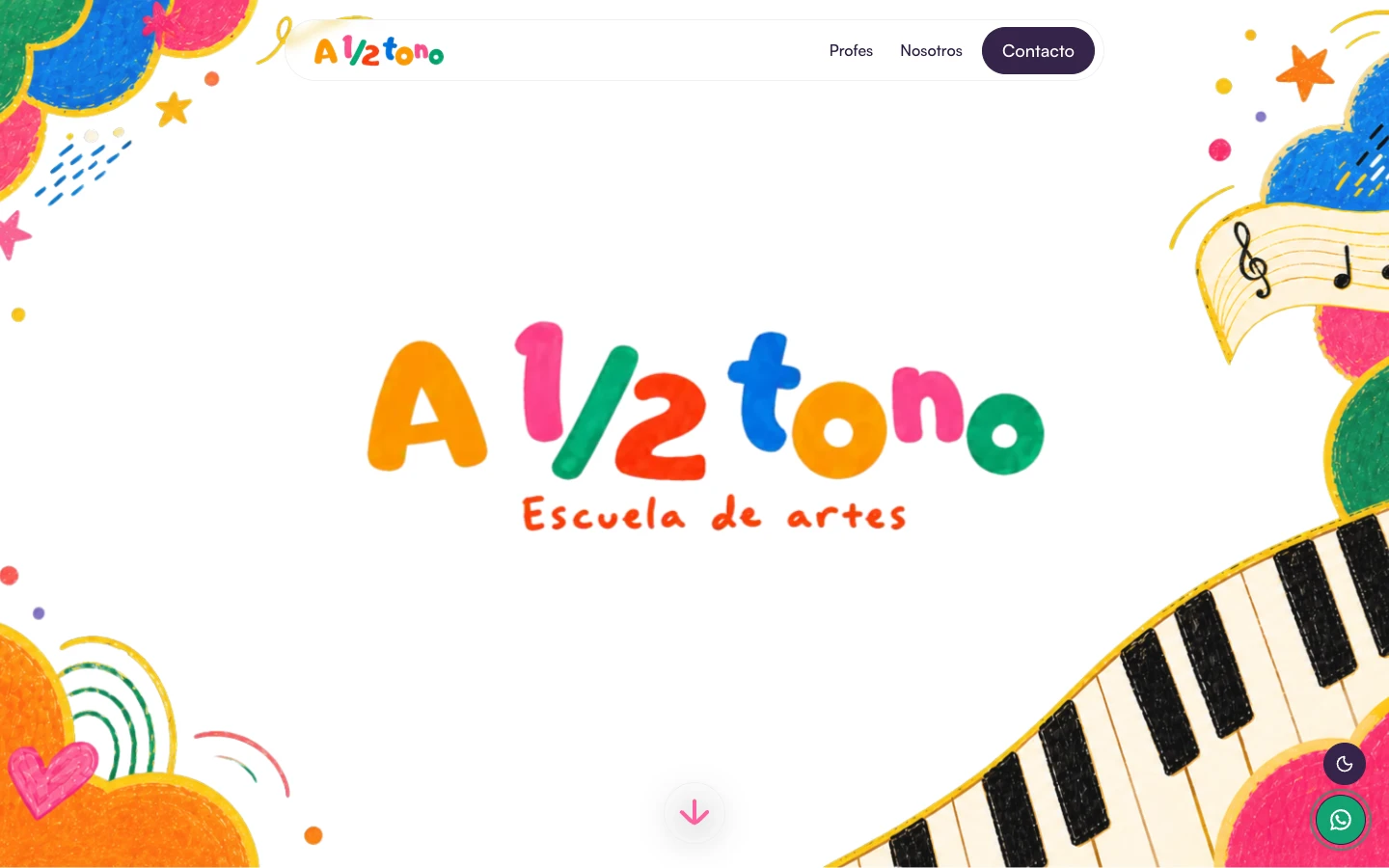
The handwritten lettering, uneven color and musical motifs make the home recognizably playful. On their own, those assets would be decoration. The useful system is their relationship to the content: a warm invitation leads to instrument selection, teacher context and a contact step. The logo can be expressive because navigation and course labels stay literal. The multicolor palette needs rules for contrast, text size and functional actions; an illustration should frame the offer rather than cover it on a narrow phone. The core acceptance question is whether a parent or student can identify the right instrument and next step without relying on the hero art.
What each discipline contributes
These are inspectable parts of the published scope. Their business effect would require a separate dated dataset.
| Discipline | Visible decision | Useful review |
|---|---|---|
| Naming | Musical reference carries personality; descriptor says school of arts | Can a new visitor say what the organization is? |
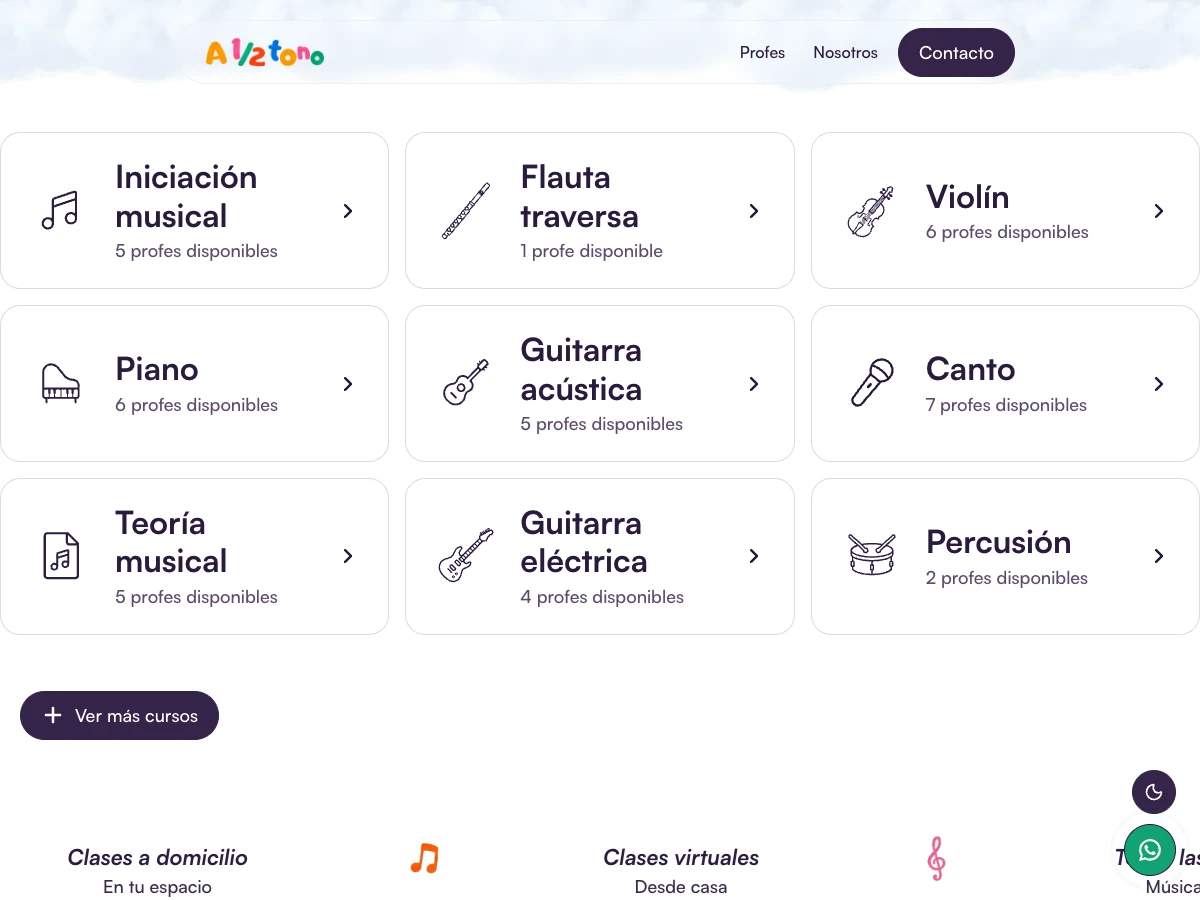
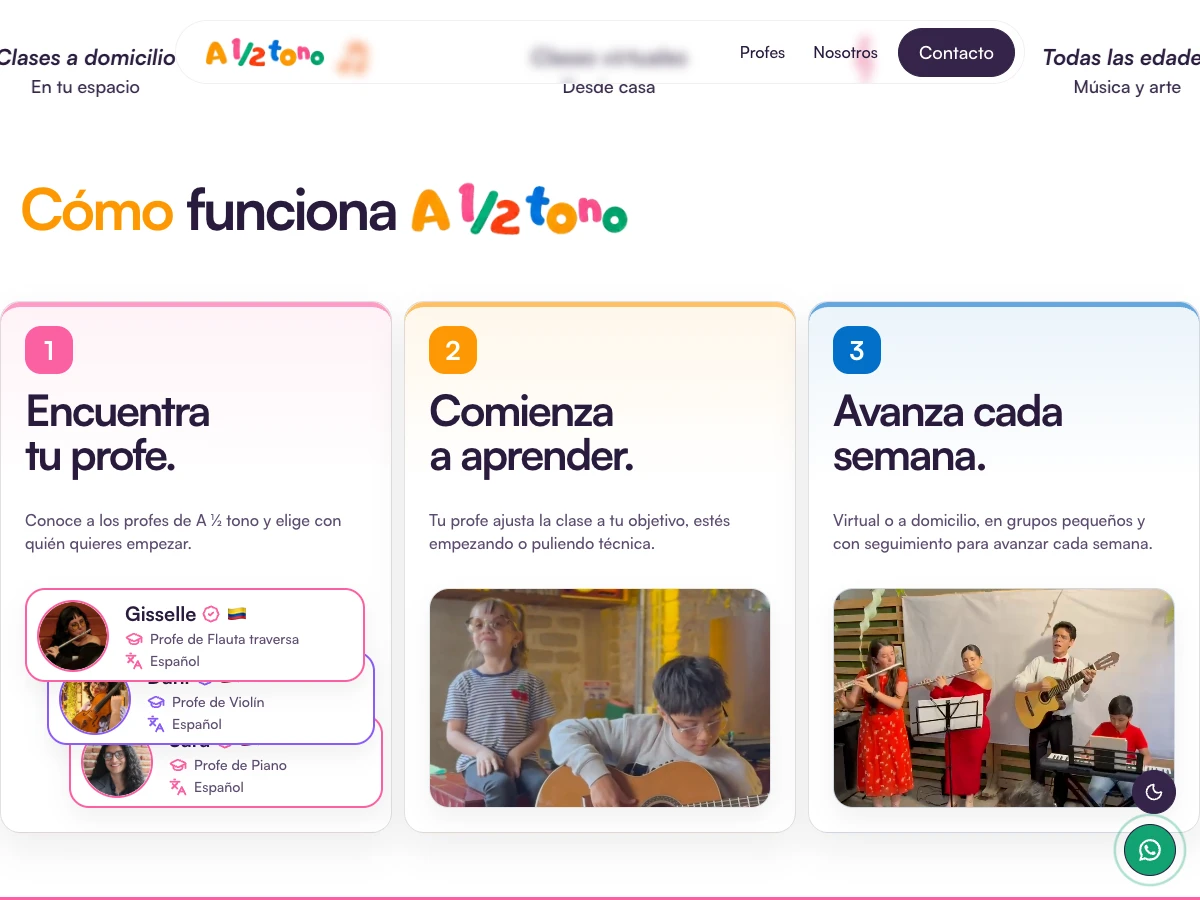
| Web and content | Separate instruments, teachers and the first-class path | Can each audience reach its relevant information and contact step? |
| Search | Give courses and people explicit titles, descriptions and stable routes | Are pages crawlable, distinct and maintained after launch? |
The launch handoff a similar brand needs
A comparable new-brand engagement should finish with name and usage rules, responsive page templates, a course and teacher content model, editorial ownership, metadata patterns, a working inquiry route and a list of first updates. Domain and trademark checks are distinct from design approval. The public site and case study support the design, development and search-ready scope; they do not supply a baseline for ranking, enrollment or revenue claims. A future outcome edition should add client-approved inquiry and discovery data with dates, definitions and context.
Sources & editorial notes
Sources
- A medio tono — public websiteamediotonomusic.com
How we built this guide
EvidenceThis guide combines 1 linked source, Dardo’s analysis and clearly labeled project examples.
LimitsVisible design and content decisions are not presented as measured ranking, traffic or conversion gains.
Read our editorial policy